 Aakash Yadav
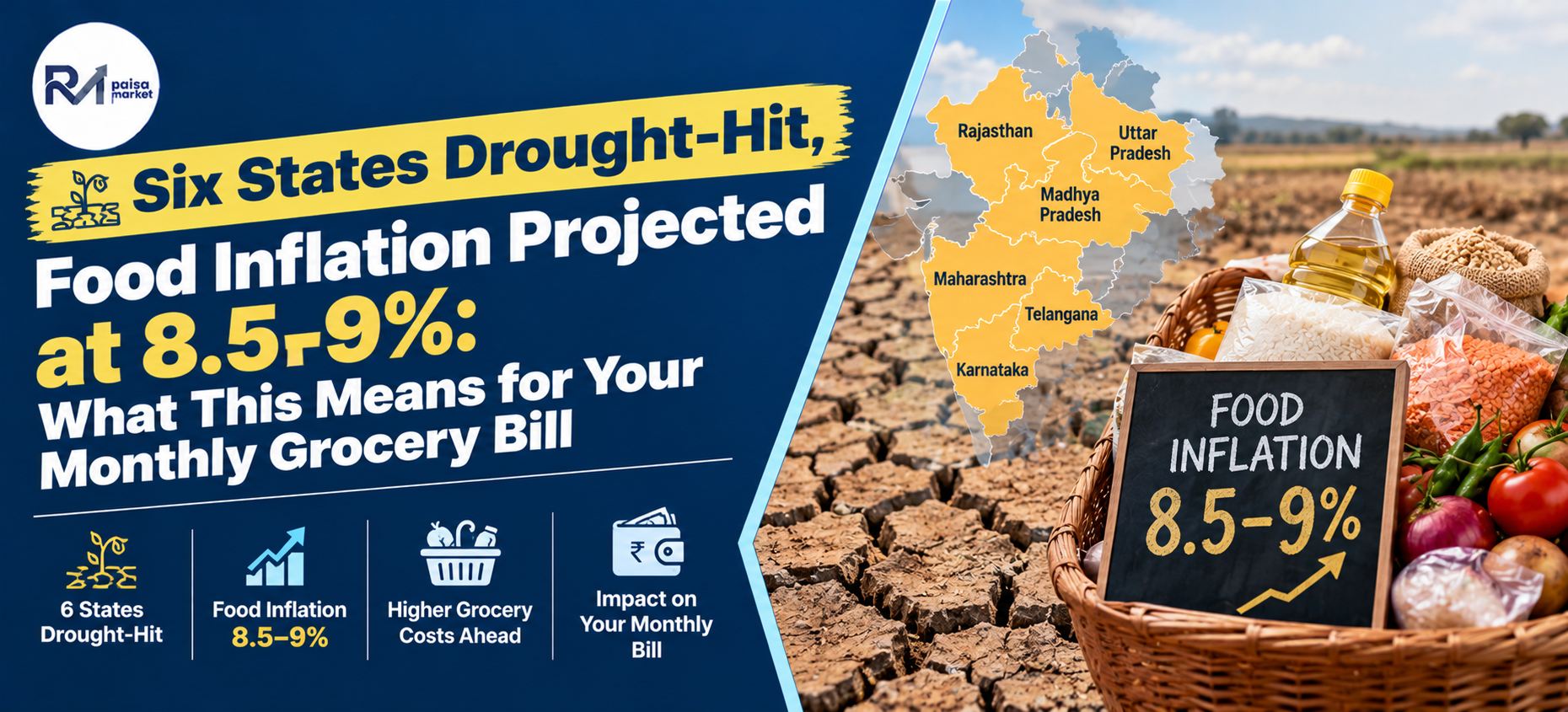
Six states have now formally declared large parts of their territory drought-affected after a weak monsoon. The combination of deficient rainfall and a strong El Niño is already showing up in crop losses, and many analysts expect food inflation to climb into the 8.5–9% range in the coming months.
For households, this is not an abstract macroeconomic number. It translates into higher prices for everyday items – pulses, rice, vegetables, onions, sugar and edible oils — exactly the things that make up the bulk of a monthly grocery bill. Here’s a clear look at the situation, the likely price path, and what families can do to limit the damage.
Table of Contents
Drought Declared in Six States – The Current Situation
The drought declarations cover significant portions of Maharashtra, Karnataka, Telangana, Andhra Pradesh, Gujarat and Rajasthan. These are important agricultural states, and the scale of the declarations is unusually large for a single season. A detailed state-wise breakdown of the affected talukas and mandals is available in Rural Voice’s report on the El Niño-driven drought spreading across the six states.
Which States and How Widespread Is the Impact
Maharashtra has declared 305 of its 358 talukas drought-affected — more than 85% of the state. Karnataka has listed 226 of 240 taluks. Telangana has notified 365 mandals across 31 districts, of which 111 are classified as severely affected. Andhra Pradesh has declared 388 of 688 mandals drought-hit. Gujarat and Rajasthan have also brought large areas under drought notification. Together, these six states account for a substantial share of India’s pulses, oilseeds, cotton, maize and sugarcane output.
Role of Weak Monsoon and El Niño
The southwest monsoon ended with a rainfall deficit of around 12.6–13%, one of the weakest performances in more than a decade. Prolonged dry spells, especially in the critical growing months, reduced soil moisture and left reservoirs well below normal levels. The strong El Niño conditions that developed this year are widely blamed for suppressing rainfall and creating the uneven distribution that hurt rain-fed agriculture the most.
Why Food Inflation Could Touch 8.5–9%
Food inflation has already been running firm. The drought is expected to push it higher because supply of several key crops will be tighter just as festive and winter demand remains strong.
Crops Most Affected by the Drought
Pulses (especially tur and urad), paddy in some regions, maize, soybean, groundnut, cotton and sugarcane have all taken a hit. Horticultural crops and vegetables grown in the affected districts are also under stress. Because many of these crops are grown in the drought-declared states, the shortfall is not easily offset by production elsewhere in the short term.
How Supply Shortages Translate into Higher Retail Prices
When arrivals in mandis fall, wholesale prices rise first. Traders and wholesalers pass the increase downstream. By the time the produce reaches retail markets and neighbourhood kirana stores, the price the consumer pays is noticeably higher. Perishables such as vegetables react fastest; stored commodities such as pulses and rice take a few weeks longer but eventually follow.
Timeline for Price Pressure to Reach Consumers
Some pressure is already visible in vegetable and onion prices. Pulses and rice are likely to firm up further over the next 4–8 weeks as the reduced kharif harvest becomes clearer and stocks are drawn down. The full effect on the consumer price index will show up in the monthly inflation prints over November, December and early 2027.
What This Means for Your Monthly Grocery Bill
A rise in food inflation to 8.5–9% does not mean every item becomes 9% costlier overnight. It means the overall food basket becomes more expensive, with some items rising much faster than others.
Items Likely to Become More Expensive First
Vegetables, onions, tomatoes and other perishables usually react first. Pulses come next. Rice and wheat products follow depending on public stock levels and government intervention. Sugar and edible oils can also firm up if domestic oilseed and sugarcane output is meaningfully lower.
Estimated Extra Cost on a Typical Household Basket
For a middle-class family that currently spends ₹8,000–10,000 a month on groceries, an effective 8–10% increase in the food component can add ₹700–1,200 to the monthly outgo. Lower-income households, which spend a larger share of their income on food, feel the squeeze more sharply. Even a ₹500–700 increase is material when budgets are already tight.
Difference Between Rural and Urban Impact
Rural households often grow some of their own food or have more direct access to farm produce, but they also suffer when local crops fail and wage opportunities in agriculture shrink. Urban households face the full retail price increase and have fewer buffers. Both groups are affected; the channels are slightly different.
Key Grocery Categories Under Pressure
Pulses, Rice and Cereals
Pulses are among the most vulnerable. India already imports a portion of its pulse requirement; any further drop in domestic output quickly shows up in retail prices. Rice prices are supported by government stocks, but local shortages in drought-hit states can still create regional spikes.
Vegetables, Onions and Perishables
These items have the shortest supply chains and the least storage buffer. Prices can move sharply within days when arrivals fall. Onions, in particular, have a history of sudden spikes when production in key states is hit.
Sugar, Edible Oil and Related Items
Lower sugarcane and oilseed output raises the prospect of tighter domestic supplies. The government has already adjusted import duties on edible oils earlier; further measures may be needed if prices continue to climb. For the exact duty cuts that came into force on 24 September and their limited pass-through so far, see our earlier analysis of how the reduction in basic customs duty on palm, soybean and sunflower oil is expected to affect cooking-oil prices.
Government Measures Already in Place or Expected
Stock Limits, Import Decisions and Market Interventions
The Centre has tools it has used before: stock limits on traders to prevent hoarding, release of stocks from the Food Corporation of India, adjustments in import duties, and, in extreme cases, restrictions on exports. States are also rolling out their own relief packages for farmers, which indirectly support future supply.
How Effective These Steps Have Been in the Past
These measures can moderate the peak of a price spike but rarely eliminate it entirely. They work best when announced early and implemented cleanly. Timing and coordination between the Centre and states matter a great deal.
Practical Steps Households Can Take Now
Smart Buying and Storage Tips
Buy non-perishable items such as pulses, rice and oil in slightly larger quantities when prices are still relatively stable, but avoid panic bulk-buying that itself drives prices up. Store them properly to avoid wastage. For vegetables, buy what you need for a few days and prioritise seasonal, locally available produce.
Switching to Alternatives Where Possible
If one pulse becomes expensive, shift temporarily to another. If a particular vegetable spikes, substitute with whatever is more reasonably priced that week. Flexibility in the kitchen can meaningfully reduce the bill.
Tracking Price Trends Before Festive Buying
The festive season is still on. Compare prices across local markets, sabzi mandis and online platforms before making large purchases. A little price awareness goes a long way when inflation is rising.
What to Watch Over the Next Few Weeks
Official Inflation Data Releases
The monthly consumer price index numbers will show how quickly food inflation is accelerating. Watch the food and beverages subgroup in particular.
Further Drought Declarations or Relief Announcements
Additional states or districts could still be notified. Central teams are already assessing some states for relief. The scale of financial assistance and the speed of its release will influence both farmer recovery and market sentiment.
Any Sudden Spike in Retail Prices of Essentials
Keep an eye on onion, tomato, tur dal and sugar prices in your local market. Sudden jumps are early warning signals that the broader basket will follow.
Frequently Asked Questions on Drought and Food Prices
Which six states are drought-hit?
Maharashtra, Karnataka, Telangana, Andhra Pradesh, Gujarat and Rajasthan have declared large areas drought-affected for the 2026 Kharif season.
Why is food inflation expected to rise to 8.5–9%?
Weak monsoon rainfall and El Niño have reduced output of key crops. Tighter supplies, especially of pulses, vegetables, oilseeds and sugarcane, are expected to push overall food inflation into the 8.5–9% range in the coming months.
Which grocery items will be affected the most?
Vegetables, onions, pulses, rice in some markets, sugar and edible oils are the categories most likely to see noticeable increases.
Will the government intervene to control prices?
Yes. The government has previously used stock limits, import duty adjustments, release of buffer stocks and other market interventions. Similar steps are expected if prices rise sharply.
How much extra could a family spend on groceries?
A typical middle-class household could see an additional ₹700–1,200 per month on its grocery bill if food inflation sustains around 8.5–9%. The exact amount depends on the family’s consumption basket and location.
Final Takeaway – How to Protect Your Household Budget
The drought in six major agricultural states is real, and the risk of food inflation climbing to 8.5–9% is credible. For households, the practical response is straightforward: stay flexible with what you cook, buy smart rather than in panic, track prices of the items you use most, and keep a small buffer of non-perishables if your storage allows.
Government intervention can moderate the extremes, but it rarely removes the entire increase. A little awareness and adjustment in the kitchen now can prevent the monthly grocery bill from rising faster than it needs to. The next few weeks will show how quickly the supply pressure feeds into retail prices — and how effectively policy responds.