 Aakash Yadav
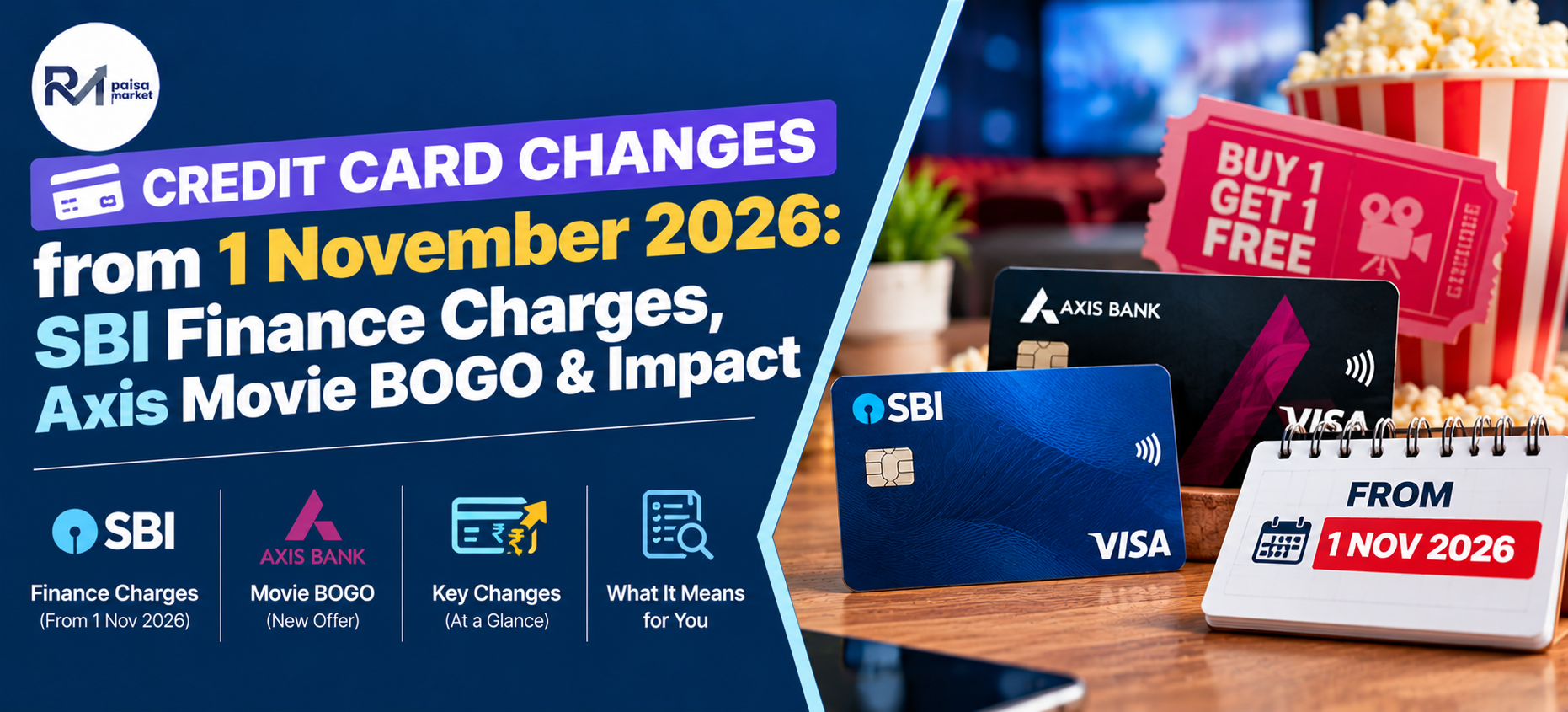
From 1 November 2026, several banks are quietly changing the rules on their credit cards. These are not dramatic overhauls, but the cumulative effect will show up clearly on the next few statements of anyone who carries a balance, withdraws cash, or relies on free movie tickets.
SBI Card continues to charge one of the steepest finance rates in the market. Axis Bank is putting a spend gate on its popular Buy-One-Get-One movie offers. Punjab National Bank is raising cash-advance and late-payment fees. A few other issuers have smaller revisions lined up around the same time.
If you already pay your full bill every month and rarely use cash advances, most of this will pass you by. If you revolve even a modest balance or treat movie benefits as a regular perk, the cost of using the card is about to rise. This piece walks through exactly what is changing, how the numbers work in real life, and what practical steps make sense before the new rules take effect.
Table of Contents
Key Credit Card Changes Taking Effect from 1 November 2026
Several issuers are revising charges and benefit conditions in the same window. The common thread is higher cost for revolving credit and tighter eligibility for lifestyle benefits that were earlier available more freely.
Banks revise these terms periodically as their own funding costs, reward expenses and risk profiles change. The November batch is noticeable because it hits three different pain points at once: the interest you pay when you do not clear the bill, the fees you pay for cash, and the conditions you must meet to keep free movie tickets.
Overview of Banks Revising Charges and Benefits
SBI Card’s finance charge of up to 3.75 per cent per month on unpaid balances remains in force and continues to be one of the highest among major issuers. Axis Bank is introducing a ₹25,000 spend requirement over the previous three calendar months for the Buy-One-Get-One movie offers on several widely held cards. Punjab National Bank has notified higher cash-advance fees and revised late-payment slabs effective 1 November. ICICI cardholders should also keep an eye on updates expected around mid-November, though the precise details vary by variant.
Why These Changes Matter for Your Monthly Bill
A credit card is free only when you treat it as a payment tool and clear the full amount every cycle. The moment you leave a balance, withdraw cash, or miss a due date, the economics change quickly. The November revisions simply make those costs a little steeper and the free perks a little harder to unlock. Understanding the exact numbers helps you decide whether small habit changes are worth making now.
SBI Card Finance Charges – What the 3.75% Rate Actually Costs
SBI Card’s finance charge of 3.75 per cent per month (45 per cent a year) on regular unsecured cards remains one of the most expensive ways to borrow in the formal system. This high cost of revolving credit sits alongside the broader rise in borrowing costs that borrowers have already seen after recent policy moves; for the parallel impact on home loans and personal loans, see our earlier analysis of how SBI’s lending rate hike from 15 October affects EMIs.
How Finance Charges Work on Revolving Balances
Suppose your statement shows ₹40,000 and you pay only ₹10,000 by the due date. The remaining ₹30,000 begins attracting finance charges from the original purchase dates. Every new swipe after that also starts accruing interest immediately. GST at 18 per cent is levied on the finance charge itself, so the effective monthly cost is higher than the headline 3.75 per cent.
The minimum amount due is calculated in a way that keeps a large portion of the balance outstanding for a long time if you pay only that amount. Over months, the interest compounds and the outstanding can remain stubbornly high even as you keep paying.
Real Cost Example on a Typical Outstanding Amount
Take a realistic case. You have ₹25,000 unpaid after the due date and you leave it for one full billing cycle.
Finance charge at 3.75 per cent = ₹937.50
GST at 18 per cent ≈ ₹169
Total extra cost for that month ≈ ₹1,106
If the same balance stays for three months and you make only minimum payments while adding a few new spends, the cumulative interest and GST can easily cross ₹3,000–₹3,500. That is money that could have stayed in your account or gone towards principal.
How to Avoid or Reduce Finance Charges
The cleanest solution is also the simplest: pay the full statement amount before the due date every single month. Most banks allow you to set auto-debit for the total amount due. Once that is in place, the risk of accidental revolving drops sharply.
If you already have an outstanding balance, prioritise clearing it over the next one or two cycles even if it means temporarily reducing discretionary spends. Avoid new purchases on the same card until the balance is zero; otherwise the interest clock starts on those spends immediately. Some people shift essential spends to a different card or to UPI while they work down the revolving balance.
Axis Bank Movie BOGO Spend Gate from 1 November
Axis Bank is converting a popular free benefit into a spend-linked one. From 1 November 2026, several cards will require a minimum spend before the Buy-One-Get-One movie offer becomes available.
From 1 November 2026, several cards will require a minimum spend before the Buy-One-Get-One movie offer becomes available. Cardholders of MYZONE, SELECT and PRIVILEGE will need to have spent at least ₹25,000 in the previous three calendar months to unlock the District Buy-One-Get-One offer. The full set of benefit revisions, including the exact spend gate and other changes, is detailed in Card Insider’s report on Axis Bank’s credit card benefit revisions and the new ₹25,000 spend requirement for movie offers.
New ₹25,000 Spend Requirement Explained
Cardholders of MYZONE, SELECT and PRIVILEGE will need to have spent at least ₹25,000 in the previous three calendar months to unlock the District Buy-One-Get-One offer. NEO cardholders face the same ₹25,000 threshold for the BookMyShow version. Only settled retail transactions count. Interest, fees, refunds, reversals and certain excluded categories do not qualify.
For newly issued cards the requirement is usually waived for the month of issuance and the following three calendar months. An upgrade from one Axis variant to another does not reset the eligibility clock.
Which Axis Cards Are Affected
The change primarily hits MYZONE, SELECT, PRIVILEGE and NEO — cards that many people hold precisely because of the movie benefit. Higher-end cards in the Axis portfolio have different benefit structures and are largely outside this particular gate.
How This Changes Movie Planning and Benefit Eligibility
Earlier, the offer was available simply by holding the card. Now it becomes conditional on recent usage. A person who spends lightly on the Axis card or spreads spends across multiple cards may find the BOGO option greyed out when they try to book tickets. Checking the three-month spend total before planning a movie outing will become a small but necessary extra step.
If the movie benefit is important to you, the practical response is to concentrate eligible spends on the relevant Axis card for a few months so that the threshold is comfortably met. Once eligibility is established, you can spread spends again if you prefer.
PNB Credit Card Charge Revisions from 1 November
Punjab National Bank has issued a formal revision of service charges effective 1 November 2026. The two areas that matter most for most cardholders are cash advances and late payments.
Higher Cash Advance Fees at ATMs
Cash withdrawal using a credit card was already expensive. From November the fee structure is moving higher on many Visa and RuPay variants. The charge is typically 2.5 per cent of the amount withdrawn or a higher minimum (often in the ₹400–₹500 range depending on whether the ATM is PNB’s own or another bank’s), whichever is greater. GST is added on top. Interest also starts immediately on cash advances, with no interest-free period.
Revised Late Payment Fees
Late-payment fee slabs are being tightened and increased, especially at the lower end of outstanding amounts. Amounts that earlier attracted a nil or very small fee can now trigger a more noticeable charge. Combined with finance charges, a missed due date becomes costlier than before.
Other Fees Cardholders Should Note
Some variants will also see changes around reward redemption fees and utility-bill payment charges above certain thresholds in a billing cycle. The exact numbers vary by card, so it is worth checking the revised schedule of charges for your specific product on the PNB website or app.
What ICICI Cardholders Should Watch Closely
ICICI Bank has been revising fees and benefit conditions in phases. Some updates are expected around mid-November. Because the changes are variant-specific, the safest approach is to log into iMobile or net banking and look at the latest fees-and-charges document or important-updates section for your particular card. A quick review now prevents surprises on the next statement.
Overall Impact on Your Credit Card Bill and Benefits
Taken together, the November changes raise the cost of revolving credit and make certain lifestyle benefits conditional on spending.
Higher Cost of Carrying a Balance
SBI Card’s 3.75 per cent monthly rate (plus GST) means that even a moderate outstanding balance becomes expensive within a couple of cycles. Other banks are not far behind. The message is clear: treating a credit card as a short-term loan is one of the costlier options available.
Reduced Ease of Accessing Movie Benefits
Axis Bank’s spend gate turns a free perk into something you have to earn through regular usage. Light users will effectively lose the benefit unless they adjust their spending pattern.
Who Is Most Affected by These Changes
People who regularly pay only the minimum due or carry balances from month to month will feel the finance-charge impact most. Those who withdraw cash on credit cards will notice the higher advance fees. Axis cardholders who valued the movie offer but spent lightly will need to change behaviour if they want to keep the benefit. PNB cardholders who occasionally miss due dates or use cash advances face higher friction costs.
Responsible users who clear the full bill every month and avoid cash advances will see almost no difference.
Practical Checklist Before 1 November 2026
A short list of concrete actions is more useful than general advice.
- Clear any revolving balances on SBI Card and other cards if cash flow allows. Even reducing the outstanding by half lowers the interest drag significantly.
- Check the last three months’ settled spend on your Axis MYZONE, SELECT, PRIVILEGE or NEO card if the movie offer matters to you. If you are below ₹25,000, consider concentrating eligible spends for the next few weeks.
- Review cash-withdrawal habits on PNB (and other) cards. Switch routine cash needs to debit cards or UPI.
- Enable auto-debit for the full amount due on every credit card you hold. This single step eliminates most late-payment and revolving-balance risk.
- Note the exact due dates and set calendar reminders a couple of days earlier as a backup.
- If you hold PNB reward points that can be redeemed without a fee today, consider redeeming them before any new redemption charges begin.
Smart Ways to Minimise the Hit on Your Wallet
Pay Full Amount Before Due Date
This remains the single most effective habit. It removes finance charges, protects your credit score, and keeps the interest-free period intact for the next cycle.
Shift High-Value or Specific Spends to Other Cards
If you need the Axis movie benefit, route enough eligible spends to that card for three months to cross the threshold. Move cash-heavy or low-reward transactions to cards that treat them better or to UPI.
Track Benefit Eligibility Windows Carefully
For Axis movie offers, the three-month window is rolling. A large purchase just before the window resets can restore eligibility. Checking the spend total once a month takes very little time and avoids disappointment at the booking stage.
Frequently Asked Questions on November Credit Card Changes
What is the new Axis movie spend requirement?
From 1 November 2026, holders of MYZONE, SELECT, PRIVILEGE and NEO cards need at least ₹25,000 of settled spend in the previous three calendar months to unlock the respective Buy-One-Get-One movie offers. New cards usually get a temporary waiver.
How much does SBI Card charge as finance fee?
Up to 3.75 per cent per month (45 per cent a year) on unpaid balances for regular unsecured cards. Interest is calculated from the transaction date and 18 per cent GST is added. Secured, Shaurya and Defence cards have a lower rate.
Are PNB cash withdrawal charges increasing?
Yes. From 1 November 2026 the cash-advance fee structure is being revised upward on many variants, typically to 2.5 per cent of the amount or a higher minimum, whichever is greater, plus GST. Interest also starts immediately.
Do these changes apply to all card variants?
Most changes are variant-specific. Always refer to the latest schedule of charges or important updates for your exact card on the issuer’s website or app.
What should I do before 1 November?
Pay outstanding balances in full if possible, verify Axis spend eligibility if you use movie offers, avoid credit-card cash withdrawals, and switch on full-amount auto-pay. A quick review of each card’s current fees and benefits takes only a few minutes and prevents avoidable costs.
Final Takeaway – What to Check and Change Before 1 November
The November changes do not rewrite the credit-card landscape, but they do raise the price of certain habits. Carrying a balance on SBI Card remains expensive at 3.75 per cent a month plus GST. Axis Bank is making its movie BOGO offers conditional on a ₹25,000 three-month spend. PNB is increasing the friction on cash advances and late payments.
The practical response is straightforward. Clear revolving balances where you can. Turn on auto-pay for the full amount due. Concentrate spends temporarily if you want to keep the Axis movie benefit. Stop using credit cards for cash. These steps cost almost nothing in effort and protect your monthly budget from the higher charges that take effect on 1 November.
A credit card works best when it is a convenient payment instrument rather than a source of expensive credit. The coming changes simply reinforce that reality. A little attention this week will keep the impact on your bill minimal.

 contact.paisamarket@gmail.com