 contact.paisamarket@gmail.com
Last updated: 11 August 2026
India’s July 2026 CPI inflation data is scheduled for release on 12 August 2026. A Mint poll of 18 economists expects retail inflation to remain between 4.3% and 4.6%, with a median estimate of about 4.4%, compared with June’s provisional 4.38% reading. A separate Reuters poll put the median forecast at 4.5%.
The July print could influence expectations for future RBI policy, but it will not automatically change home-loan EMIs or personal-loan rates on the day of the release.
Key takeaway: July CPI is primarily a signal for the inflation and interest-rate outlook. Your EMI changes only if your lender revises the applicable interest rate or your loan reaches its contractual reset date.
India July CPI Inflation: What We Know Before the Release
The Ministry of Statistics and Programme Implementation (MoSPI) has scheduled the release of the July 2026 All-India Consumer Price Index (CPI) data for 12 August 2026. The official release calendar confirms the date, but does not establish a fixed 4:00 p.m. publication time. The exact release timing should therefore be checked on the MoSPI website on the day.
June’s provisional headline CPI inflation was 4.38%, up from 3.93% in May. That made June the first month in the current sequence in which retail inflation moved above the RBI’s 4% medium-term target.
Economists are therefore watching whether July inflation moves higher again or stabilises around June’s level.
Quick Facts
| Indicator | Latest / Expected Position |
|---|---|
| Data | July 2026 All-India CPI inflation |
| Release date | 12 August 2026 |
| Release time | Verify with MoSPI on release day |
| May 2026 CPI | 3.93%, provisional |
| June 2026 CPI | 4.38%, provisional |
| Mint poll range | 4.3%–4.6% |
| Mint poll median | About 4.4% |
| Reuters poll median | 4.5% |
| RBI inflation target | 4% |
| RBI tolerance band | 2%–6% |
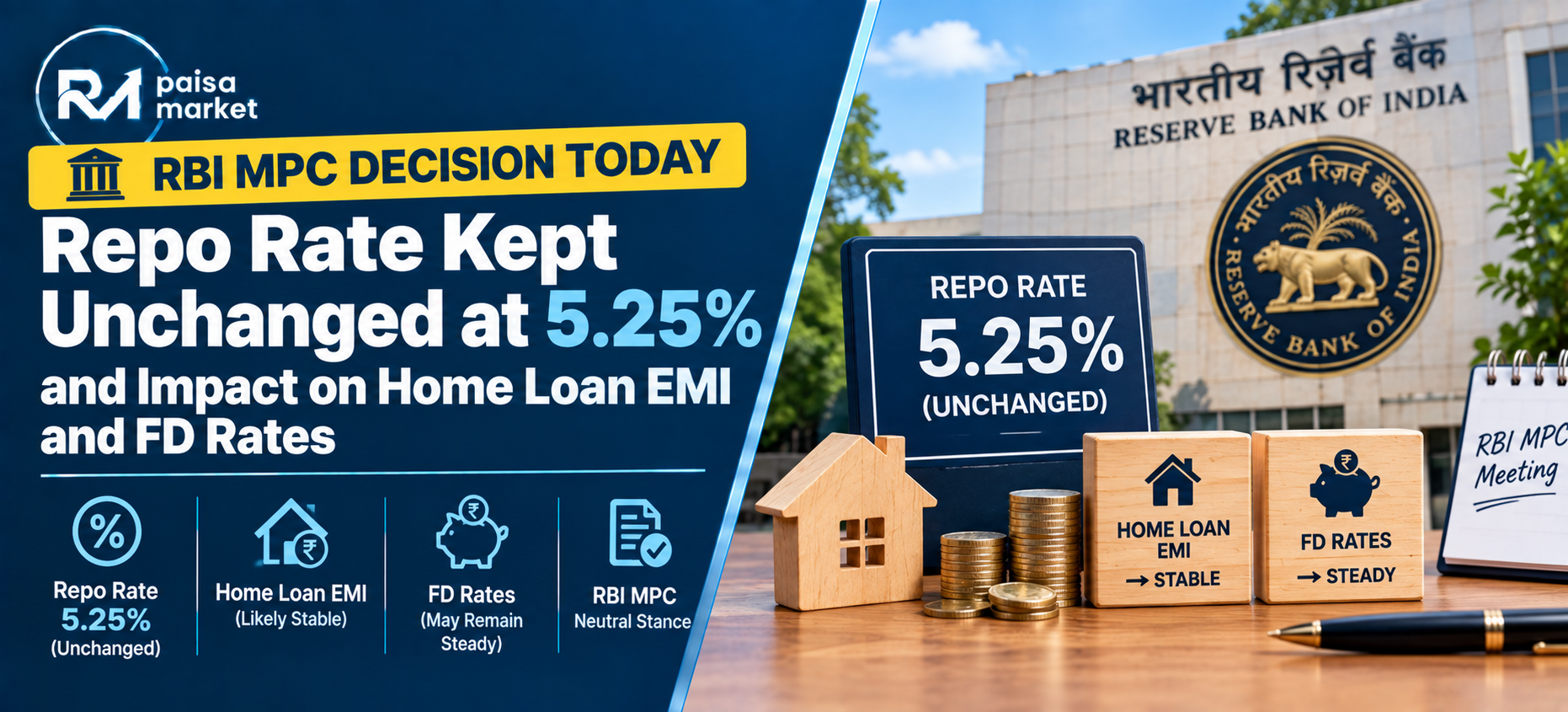
| Current repo rate | 5.25% |
| Latest RBI stance | Repo rate unchanged at the August 2026 policy meeting |
The RBI’s current policy repo rate is 5.25%.
What Economists Expect From July CPI
The most closely watched pre-release estimate is the Mint poll of 18 economists, which puts July retail inflation in a 4.3%–4.6% range, with a median estimate of approximately 4.4%.
A separate Reuters poll of economists placed the median July CPI forecast at 4.5%. Reuters reported that food prices were expected to be an important source of pressure, while inflation would remain within the RBI’s 2%–6% tolerance band.
The difference between the two surveys is small, but it matters when interpreting the number.
It would be inaccurate to say that “economists expect 4.4%” as though there were one official forecast. The more precise description is:
- Mint poll: 4.3%–4.6%, median about 4.4%.
- Reuters poll: median 4.5%.
- Official July CPI: Not yet released as of 11 August 2026.
That distinction matters because the actual CPI number can differ from survey expectations.
Why July CPI Matters for the RBI
The RBI targets headline CPI inflation at 4%, with a tolerance band of 2% to 6%.
A July reading above 4% for a second consecutive month could reinforce a cautious approach to further changes in policy rates. However, it would not automatically mean an RBI rate hike, just as a softer-than-expected reading would not automatically guarantee a rate cut.
The central bank considers a wider set of indicators, including:
- Headline CPI inflation
- Food-price movements
- Core inflation
- Growth conditions
- Crude oil and energy prices
- Inflation expectations
- Liquidity conditions
- Global economic and financial risks
The timing is also important.
The RBI’s August 2026 MPC meeting has already taken place, with the repo rate remaining at 5.25%. Therefore, the July CPI number will feed into expectations for future policy decisions, rather than alter the August decision retrospectively.
A 4% CPI Reading Is Not an Automatic Rate-Cut or Rate-Hike Trigger
It is tempting to treat the RBI’s 4% inflation target as a mechanical trigger.
It is not.
For example, if July CPI comes in at 4.6%, that does not mean the RBI must raise rates. Similarly, a reading below 4% would not require the RBI to cut rates.
The RBI assesses the direction and persistence of inflation, the balance between inflation and growth, and the risks surrounding the outlook.
That is why one monthly CPI number should be treated as one piece of the monetary-policy puzzle, rather than a direct signal for borrowers.
Will July CPI Change Your Home-Loan EMI?
Not automatically.
The July CPI release itself does not reprice a home loan.
For a borrower, the actual EMI depends on the interest rate charged by the lender, the loan benchmark, the spread, the outstanding principal, remaining tenure and the lender’s reset mechanism.
For example, if a home loan is linked to an external benchmark and the lender eventually changes the applicable lending rate, the borrower’s rate may change according to the contractual reset mechanism.
But that is different from saying:
“CPI rises → EMI rises tomorrow.”
That is not how the transmission works.
What Borrowers Should Check
Before assuming that an inflation reading will affect your EMI, check:
- Your current interest rate.
- The benchmark used by your lender.
- Your lender’s spread.
- The reset frequency.
- The next reset date.
- Whether your EMI or tenure changes when the rate is revised.
- Any applicable charges for refinancing or balance transfer.
A borrower considering prepayment or refinancing should compare the actual savings against processing fees, foreclosure or other applicable charges rather than making a decision based solely on the CPI headline.
What About Personal Loans?
The same broad principle applies to personal loans.
A CPI release does not directly change the interest rate on an existing personal loan.
Whether a borrower sees a change depends on the loan’s contractual terms and whether the lender changes the applicable rate.
Personal loans can also be priced differently from home loans because lenders consider factors such as borrower risk, credit profile, tenure and product-specific pricing.
Therefore, a July CPI number should not be interpreted as an immediate signal that every personal-loan EMI will increase or decrease.
What About Fixed Deposits?
CPI also does not directly determine bank fixed-deposit rates.
Banks set deposit rates based on several factors, including:
- Deposit demand.
- Liquidity conditions.
- Credit growth.
- Funding requirements.
- Competition between banks.
- Expectations about future interest rates.
A higher-than-expected CPI print could influence expectations for the future interest-rate path, but it does not force banks to immediately change FD rates.
For depositors, the more useful question is therefore whether banks begin changing their deposit rates in response to evolving liquidity and monetary-policy expectations.
The RBI’s current published rates show the repo rate at 5.25%, while the Standing Deposit Facility rate is 5.00% and the MSF and Bank Rate are 5.50%.
What Could Be Driving July Inflation?
Before the official release, it is important not to declare specific categories as the confirmed drivers.
Analysts are watching food prices, energy-related costs and the broader inflation trend, but the actual contribution of each category will only be clear once MoSPI publishes the July data.
Reuters’ pre-release assessment pointed to food-price pressure as a key factor behind the expected July increase. It also estimated core inflation, excluding food and fuel, at around 4.08%.
That core figure is an analyst estimate, not the headline CPI number published by MoSPI.
What Is Core Inflation?
Core inflation is generally used by economists to assess underlying price pressure after excluding volatile components such as food and fuel.
It is important not to confuse this with the headline CPI figure.
The official CPI release provides the headline CPI and Consumer Food Price Index (CFPI), along with rural, urban and category-level data. Core inflation is commonly calculated or reported separately by economists and analysts.
What to Watch in the July CPI Release
When MoSPI publishes the July data, readers should look beyond the headline CPI number.
The key numbers will include:
- Headline CPI inflation
- Consumer Food Price Index (CFPI)
- Rural inflation
- Urban inflation
- Combined inflation
- Major commodity-group movements
- Month-on-month price changes, where reported
- Analyst estimates of core inflation
This breakdown will help determine whether a change in headline inflation is broad-based or concentrated in a few categories.
May vs June vs July: The Inflation Trend
The recent trend provides useful context.
| Month | CPI Inflation | Status |
|---|---|---|
| May 2026 | 3.93% | Provisional |
| June 2026 | 4.38% | Provisional |
| July 2026 | 4.3%–4.6% expected by Mint poll | Forecast |
MoSPI’s May release recorded CPI inflation at 3.93%, while June subsequently rose to 4.38%.
The July number will therefore answer an important question:
Was June’s rise a temporary move, or is inflation settling at a higher level?
That distinction could matter more for monetary-policy expectations than the difference between, say, 4.4% and 4.5% itself.
What July CPI Means for Borrowers
For borrowers, the most important distinction is between inflation data and loan pricing.
Existing Home-Loan Borrowers
Do not expect your EMI to change simply because July CPI is released.
Monitor your lender’s benchmark, spread and reset date instead.
New Home-Loan Borrowers
A CPI print can influence market expectations, but the actual home-loan rate offered to you depends on the lender and product.
Compare:
- Interest rate
- Benchmark
- Spread
- Processing fees
- Reset terms
- Prepayment conditions
Personal-Loan Borrowers
Do not assume that a higher CPI automatically means your personal-loan rate will rise.
Check the rate structure and terms of the specific loan.
FD Investors
Watch bank deposit-rate changes rather than reacting to the CPI headline alone.
If rates begin moving, investors can compare different tenures and consider spreading maturities instead of concentrating all deposits at one rate.
What Happens After the July CPI Release?
The July CPI figure will become another input into the RBI’s assessment of inflation and growth.
The immediate market reaction may come through:
- Government bond yields
- Interest-rate expectations
- Banking stocks
- Rate-sensitive equities
- The rupee
- Money-market instruments
But market reaction can depend on how the actual number compares with expectations.
For example, a 4.5% CPI print may have a different market impact if economists expected 4.4% than if the market was positioned for 4.7%.
The surprise relative to expectations can matter as much as the headline number itself.
July CPI Release: What Home-Loan Borrowers Should Do
There is no need to change a loan strategy solely because the July CPI number is released.
Instead:
- Check your current home-loan rate.
- Confirm your benchmark and spread.
- Check the next reset date.
- Compare current offers if considering refinancing.
- Calculate the actual savings before paying transfer or processing costs.
- Avoid assuming that a single CPI print guarantees a future rate move.
The CPI release is useful for understanding the broader interest-rate environment, but it is not a direct EMI calculator.
Frequently Asked Questions
When will India release July 2026 CPI inflation data?
MoSPI has scheduled the release of India’s July 2026 CPI data for 12 August 2026. The exact publication time should be checked on the MoSPI website on the release day.
What is the expected July 2026 CPI inflation rate?
A Mint poll of 18 economists expects July CPI inflation between 4.3% and 4.6%, with a median estimate of about 4.4%. A separate Reuters poll has a median forecast of 4.5%.
What was India’s CPI inflation in June 2026?
India’s June 2026 CPI inflation was 4.38%, according to the provisional government data reported after the release.
Will July CPI inflation change my home-loan EMI?
No, not automatically. CPI data can influence expectations about future RBI policy, but an EMI changes only when the lender revises the applicable interest rate or the loan reaches its contractual reset point.
Will a high CPI number force the RBI to increase the repo rate?
No. The RBI considers inflation alongside growth, food prices, core inflation, liquidity and other economic risks. A single CPI reading does not mechanically determine the repo rate.
What is the RBI repo rate right now?
The current policy repo rate is 5.25%, according to the RBI’s published rates.
Bottom Line: July CPI Matters More for the Rate Outlook Than Tomorrow’s EMI
India’s July CPI release on 12 August 2026 will be closely watched because June inflation had already moved up to 4.38%, above the RBI’s 4% target.
Economists surveyed by Mint expect July inflation at around 4.4%, while the Reuters poll puts the median at 4.5%.
But borrowers should not interpret the release as an automatic change to their EMIs.
July CPI → influences inflation expectations → can influence future RBI policy expectations → may eventually affect market and lending rates.
It is not:
July CPI → immediate EMI change.
The more important question for borrowers is what the RBI and lenders do over subsequent policy and rate-reset cycles.
PaisaMarket will update this story after MoSPI publishes the official July CPI number, including the actual headline inflation rate, food inflation, rural-urban split, category-wise drivers and what the result means for RBI policy and loan rates.
Sources
- Ministry of Statistics and Programme Implementation (MoSPI) — official CPI releases and release calendar.
- Reserve Bank of India — policy rates and monetary-policy information.
- Mint — July 2026 CPI economist poll
- Reuters — July 2026 CPI expectations
Editorial update note: This article is a pre-release explainer as of 11 August 2026. July CPI figures are forecasts until MoSPI publishes the official data on 12 August. Once released, the headline, Quick Facts, trend table and analysis should be updated with the official number.