 contact.paisamarket@gmail.com
The ITR filing deadline 31 July 2026 is just around the corner, and the Income Tax Department has already received over 4 crore income tax returns for Assessment Year (AY) 2026–27. If you haven’t filed your return yet, now is the time to act to avoid late filing fees, interest, and other consequences.
- Who must file by 31 July? Most salaried individuals and non-audit taxpayers filing ITR-1 or ITR-2.
- What’s at stake? A late fee of up to ₹5,000, interest on unpaid taxes, and the loss of certain tax benefits.
- What this guide covers: Due dates, eligibility, penalties, and a last-minute filing checklist.
Quick Facts: ITR Filing Deadlines for AY 2026–27
- Assessment Year (AY): 2026–27 (Financial Year 2025–26)
- ITR-1 & ITR-2 (Most salaried individuals): 31 July 2026
- ITR-3 & ITR-4 (Non-audit business/profession cases): 31 August 2026
- Tax Audit Cases: 31 October 2026
- Transfer Pricing Cases: 30 November 2026
- Late Filing Fee (Section 234F):
- ₹1,000 if total income is up to ₹5 lakh
- ₹5,000 for other eligible taxpayers
- Belated Return Deadline: 31 December 2026
- Revised Return Deadline: 31 March 2027
Quick Tip: If you’re filing ITR-1 or ITR-2, don’t assume you’ll get an extension. The Income Tax Department has repeatedly urged taxpayers to complete the process well before the deadline.
What’s Happening: Over 4 Crore ITRs Already Filed
The Income Tax Department has announced that more than 4 crore Income Tax Returns (ITRs) have already been filed for AY 2026–27, reflecting a steady pace of compliance as the 31 July deadline approaches. The department has also appealed to taxpayers to avoid waiting until the final day to reduce pressure on the e-filing portal and ensure a smoother filing experience.
Every year, a significant number of taxpayers rush to file their returns in the last 24 to 48 hours. While the portal is designed to handle high traffic, last-minute users may still experience slower response times, payment delays, or issues with e-verification. Filing early also leaves enough time to fix any errors before submission.
Who Must File by 31 July 2026?
The 31 July 2026 deadline mainly applies to taxpayers whose accounts do not require a tax audit.
This includes:
- Salaried employees filing ITR-1 (Sahaj)
- Pensioners
- Individuals earning income from one or more house properties
- Taxpayers with interest income and other sources
- Individuals filing ITR-2 (including eligible capital gains cases)
- Other non-audit individual taxpayers required to file their return by 31 July under the Income-tax Act, 1961.
Taxpayers Who Get Extra Time
Not everyone needs to file by 31 July. Some categories have extended due dates based on the nature of their income or business.
| Taxpayer Category | Common ITR Form | Due Date |
|---|---|---|
| Salaried individuals & other non-audit taxpayers | ITR-1, ITR-2 | 31 July 2026 |
| Business/Profession (Non-audit) | ITR-3, ITR-4 | 31 August 2026 |
| Tax Audit Cases | ITR-3/5/6, etc. | 31 October 2026 |
| Transfer Pricing Cases | Applicable Forms | 30 November 2026 |
Source: Income Tax Department due-date schedule.
Are You Unsure Which Deadline Applies?
A common misconception this year is that everyone must file by 31 July. That’s not correct.
- If you’re a salaried employee, the 31 July deadline generally applies.
- If you’re a freelancer, consultant, or small business owner filing a non-audit ITR-3 or ITR-4, your due date is 31 August 2026.
- If your accounts are subject to a tax audit, you have until 31 October 2026.
- Taxpayers covered by transfer pricing provisions have time until 30 November 2026.
Don’t assume your due date based on someone else’s situation. Filing under the correct timeline can help you avoid unnecessary penalties and compliance issues.
What You Lose by Missing the 31 July Deadline
Missing the ITR filing deadline 31 July 2026 doesn’t just mean paying a late filing fee. Depending on your tax situation, it can also lead to interest on unpaid taxes, delayed refunds, loss of certain tax benefits, and fewer options to optimise your tax liability.
If you’re required to file by 31 July 2026, it’s worth taking a few minutes now rather than dealing with avoidable costs later.
1. Late Filing Fee Under Section 234F
The Income-tax Act imposes a late filing fee if you miss the due date and file a belated return.
| Total Income | Late Filing Fee |
|---|---|
| Up to ₹5 lakh | ₹1,000 |
| Above ₹5 lakh | ₹5,000 |
The fee is automatically calculated by the Income Tax Department’s e-filing portal when you submit a belated return. It is separate from any tax payable or interest due. (Source: Income-tax Act, Section 234F)
2. Interest Under Section 234A
If you have unpaid tax after adjusting TDS, advance tax and other eligible credits, you may also have to pay interest under Section 234A.
The interest is charged at:
- 1% per month or part of a month
- Calculated on the outstanding tax amount
- Applicable from the original due date until the return is filed
For taxpayers who have already paid their full tax liability through TDS or advance tax, this interest may not apply.
3. You May Lose the Benefit of Carrying Forward Certain Losses
One of the most overlooked consequences of filing late is the inability to carry forward certain losses to future years.
If the return is not filed within the prescribed due date, taxpayers may lose the ability to carry forward losses such as:
- Capital losses
- Business losses
- Certain other eligible losses under the Income-tax Act
These losses can otherwise be used to reduce taxable income in future years, potentially lowering future tax liability.
Note: House property loss is treated differently under the Income-tax Act and may still be carried forward subject to applicable conditions.
4. Delay in Receiving Your Tax Refund
If you’re expecting an income tax refund, filing late can also mean waiting longer for your money.
The Income Tax Department generally processes returns in the order they are verified. Filing closer to or after the deadline could delay:
- Return processing
- Refund issuance
- Rectification of any errors
If you’re due a refund, filing early is usually the quickest way to receive it.
5. Tax Regime Choices May Be Affected
For certain taxpayers—particularly those with business or professional income—the due date can also affect the ability to exercise or change the option between the old and new tax regimes, depending on the applicable provisions and forms filed.
If you’re unsure which regime applies to you, review your eligibility before submitting the return rather than waiting until after the due date.
Last-Minute ITR Filing Checklist
Before you log in to the e-filing portal, spend five minutes running through this checklist. It can help prevent common mistakes that lead to defective returns or delayed refunds.
1. Gather Your Tax Documents
Keep these documents ready:
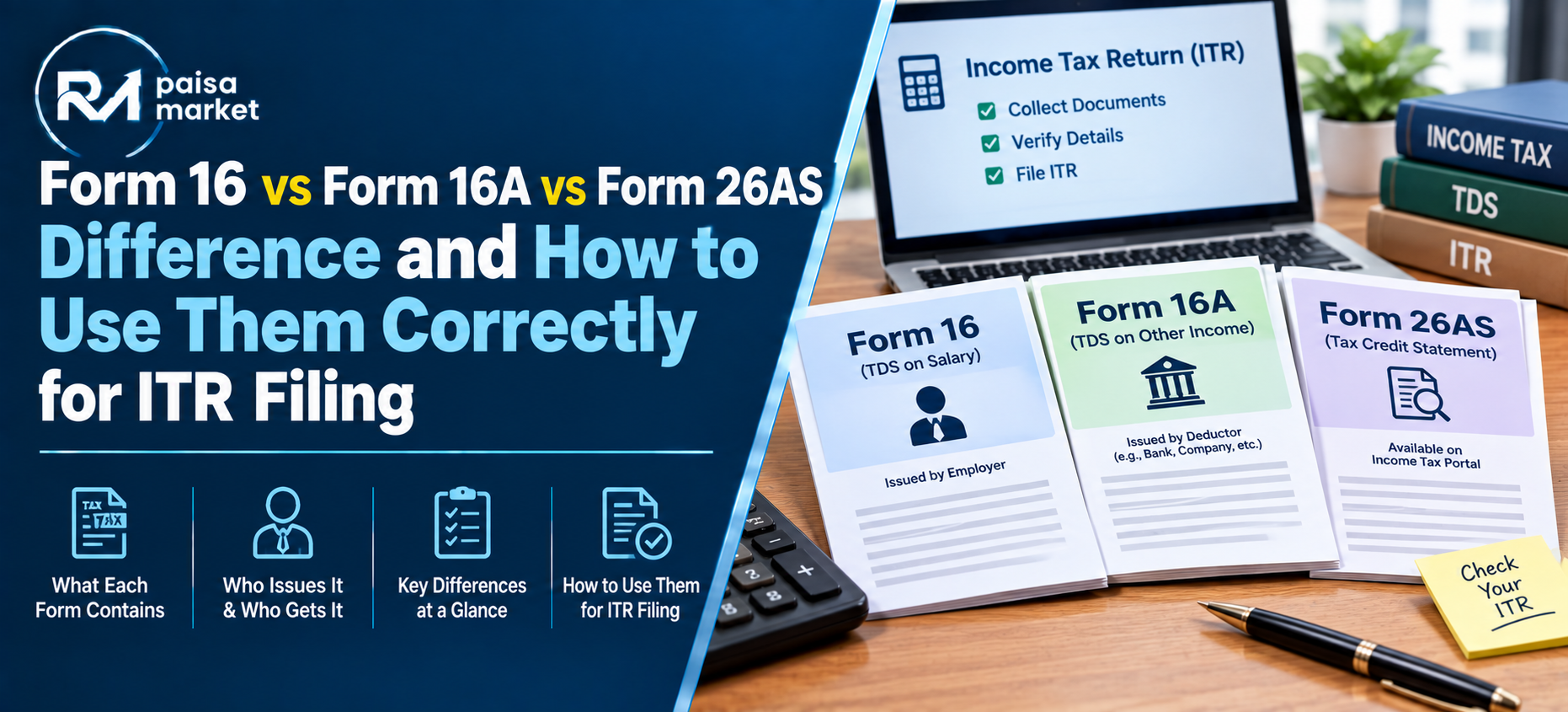
- Form 16
- Form 26AS
- Annual Information Statement (AIS)
- Taxpayer Information Summary (TIS)
- Bank account details
- Investment proofs (if applicable)
2. Reconcile AIS and Form 26AS
Check that:
- Salary matches Form 16
- TDS entries are correctly reflected
- Interest income is reported
- Capital gains (if any) are correctly captured
Any mismatch should be resolved before filing.
3. Choose the Correct ITR Form
Using the wrong return form can make your return defective.
For example:
- ITR-1: Most salaried individuals
- ITR-2: Capital gains or multiple house properties
- ITR-3: Business or professional income
- ITR-4: Presumptive taxation cases
4. Verify Your Bank Account
Ensure that:
- Your bank account is pre-validated.
- IFSC and account number are correct.
- The account is linked for receiving refunds.
Incorrect bank details are among the most common reasons for refund delays.
5. Pay Self-Assessment Tax (If Required)
If the portal shows any outstanding tax after considering TDS and advance tax:
- Pay the tax before submitting the return.
- Keep the challan details ready.
- Update the payment information while filing.
6. Review the Pre-Filled Information Carefully
Don’t assume the pre-filled data is error-free.
Double-check:
- PAN details
- Address
- Salary
- Bank accounts
- Dividend income
- Interest income
7. E-Verify Immediately
Your ITR is not considered complete until it is verified.
You can e-verify using:
- Aadhaar OTP
- Net Banking
- Bank Account EVC
- Demat EVC
- Digital Signature Certificate (where applicable)
Avoid leaving verification for later.
8. Save the Acknowledgement
After successful filing:
- Download the ITR-V acknowledgement.
- Save the XML/PDF copy.
- Keep a copy of the verification confirmation for future reference.
How to File Your ITR in the Last 48–72 Hours
If you’re filing close to the deadline, follow these steps to minimise errors and avoid delays.
Step 1: Log in to the e-Filing Portal
Visit the official Income Tax e-Filing portal and sign in using your PAN, password and OTP.
Step 2: Select Assessment Year 2026–27
Choose:
- Assessment Year: AY 2026–27
- Mode: Online
- Status: Individual (or as applicable)
Step 3: Select the Correct Return Form
The portal will recommend an ITR form based on your profile, but you should still verify that it matches your sources of income.
Step 4: Check the Pre-Filled Data
Review every section carefully instead of clicking “Continue.”
Pay particular attention to:
- Salary
- TDS
- Interest income
- Capital gains
- Deductions claimed
Step 5: Pay Outstanding Tax (If Any)
If there’s tax payable:
- Complete the payment.
- Wait for the challan to be reflected.
- Continue with the return.
Step 6: Submit Your Return
Review the computation one final time before clicking Submit.
Step 7: Complete e-Verification
Without e-verification, your return is treated as incomplete.
Finish the verification immediately after submission.
Common Last-Minute Errors (and Quick Fixes)
| Mistake | Quick Fix |
|---|---|
| Wrong ITR form selected | Check eligibility before filing |
| AIS/Form 26AS mismatch | Reconcile income and TDS first |
| Bank account not validated | Pre-validate before submission |
| Forgot interest income | Include all savings and FD interest |
| Didn’t e-verify | Complete Aadhaar OTP or Net Banking verification immediately |
| Waiting until the final few hours | File as early as possible to avoid portal congestion |
Tip: Don’t wait until the evening of 31 July. Every year, traffic on the e-filing portal increases sharply during the final hours, which can slow down logins, payments and e-verification. Filing even a day earlier can help you avoid unnecessary stress.
If You Miss the 31 July Deadline: What Are Your Options?
Missing the ITR filing deadline 31 July 2026 doesn’t necessarily mean you can’t file your return. The Income Tax Department allows taxpayers to file belated, revised, and updated returns under different provisions of the Income-tax Act. However, each option comes with its own conditions, deadlines and, in some cases, additional costs.
Belated Return
If you miss the original due date, you can still file a belated return.
- Deadline: 31 December 2026
- Late Fee: Up to ₹5,000 under Section 234F (₹1,000 if total income does not exceed ₹5 lakh)
- Interest: May apply under Sections 234A, 234B and 234C, depending on your tax liability.
A belated return helps you stay compliant but may result in additional costs and the loss of certain tax benefits.
Revised Return
Made a mistake in your original return? You don’t need to panic.
If you’ve already filed your ITR but later discover an error—such as incorrect income, deductions, bank details or omitted information—you can file a revised return.
- Deadline: 31 March 2027
- Purpose: Correct errors in an already filed return
- Fee: No separate fee, although applicable interest or taxes may still apply.
Updated Return (ITR-U)
The government also provides an option to file an Updated Return (ITR-U) for eligible taxpayers who need to declare additional income or correct omissions after the usual deadlines.
Under the current provisions, an updated return can generally be filed within 48 months from the end of the relevant assessment year, subject to prescribed conditions and the payment of additional tax. It cannot be used to claim a higher refund or reduce an already determined tax liability.
At a Glance
Return Type Deadline Extra Cost Best For Original Return 31 July / 31 Aug / 31 Oct (as applicable) None Filing within the due date Belated Return 31 December 2026 Late fee + possible interest Missed the due date Revised Return 31 March 2027 No separate fee Correcting mistakes Updated Return (ITR-U) Up to 48 months (subject to conditions) Additional tax payable Reporting omitted income Common Last-Minute Mistakes (and How to Avoid Them)
Even experienced taxpayers make mistakes when filing close to the deadline. Here are some of the most common ones:
- Using the wrong ITR form → Check your income sources before selecting the form.
- Ignoring AIS or Form 26AS mismatches → Reconcile all income before submitting.
- Forgetting bank interest or FD interest → Declare income from all bank accounts.
- Claiming deductions without supporting documents → Keep proof ready if requested.
- Entering incorrect bank details → Verify your refund account carefully.
- Skipping e-verification → Your return isn’t complete until it’s verified.
- Waiting until the last few hours → Heavy portal traffic can delay filing and payment.
Pro Tip: Complete your filing during off-peak hours (early morning or late evening) if you’re filing on the last day.
Frequently Asked Questions (FAQs)
1. What is the ITR filing deadline for salaried individuals in 2026?
For most salaried taxpayers filing ITR-1 or ITR-2, the due date for Assessment Year 2026–27 is 31 July 2026, as notified by the Income Tax Department.
2. What happens if I miss the 31 July 2026 ITR deadline?
You can still file a belated return until 31 December 2026, but you may have to pay a late filing fee under Section 234F, interest on unpaid taxes and could lose the benefit of carrying forward certain losses.
3. How much is the late filing fee?
The late filing fee under Section 234F is:
- ₹1,000 if your total income is up to ₹5 lakh.
- ₹5,000 if your income exceeds ₹5 lakh.
4. Can I revise my ITR after filing?
Yes. If you discover any mistake in your original return, you can file a revised return up to 31 March 2027, provided the original return was filed.
5. What is ITR-U?
ITR-U (Updated Return) allows eligible taxpayers to voluntarily update their tax return by declaring previously omitted income. It is available for up to 48 months from the end of the relevant assessment year, subject to conditions and payment of additional tax.
6. Is e-verification mandatory?
Yes. Filing your return is only the first step. Your ITR must also be e-verified within the prescribed time; otherwise, it will be treated as invalid.
Conclusion
With the ITR filing deadline 31 July 2026 fast approaching and more than 4 crore returns already filed, this is the ideal time to complete your income tax return if you haven’t done so already.
Waiting until the final hours increases the chances of portal congestion, payment delays and filing errors. More importantly, missing the due date could result in a late filing fee of up to ₹5,000, interest on outstanding taxes and the loss of valuable tax benefits.
Before you submit your return, take a few minutes to verify your income details, reconcile your AIS and Form 26AS, choose the correct ITR form and complete e-verification. A little extra attention today can save you time, money and unnecessary hassle later.